Pedal to the Medal: The Possibility Mindset
Course Outline
Pedal to the Medal: The Possibility Mindset
What happens when a journeyman backup guitarist stumbles onto a strange new musical technology and decides to push it to its limits? The sound of rock is changed forever—and we get a masterclass in how curiosity beats caution when new tech shows up. If you want an edge in the AI era, this is the mindset to copy.
In this video you’ll discover:
- How one fearless musician turned the wah-wah pedal’s “dying sheep noise” into pure magic
- Parallel stories of pioneers who spotted hidden potential: Richard Trevithick (steam engines),
Grace Hopper (computers), and Jeff Bezos (the World-Wide Web) - How to embrace a “possibility mindset” emphasizing curiosity and adaptability
Teacher Resources
Related to this video

Transcript
This is a story of three guitarists in the 1960s and how one embraced technology to change music forever. And if you listen closely, you'll hear a lesson reverberating into the present. When faced with something new and revolutionary, do you embrace it or dismiss it?
Our story begins in the 1950s, as rock and roll explodes onto the scene. Rock guitars of that era sound like this... or this:
But by 1967, the sound of rock and roll is about to change. That's when Vox Amps releases the wah-wah pedal, a device that could make a guitar sing like a trumpet. Instead of a standard guitar tone, your guitar can sound like something entirely new. Pretty cool, right?
As a promotional tool, Vox Amps gives the wah-wah pedal to our first guitarist, Johnny Echols. He plays lead guitar in Love, a popular rock and roll band. Echols gives the pedal a try. But instead of hearing a trumpet or even a guitar, all he hears is the wails of dying sheep. So he dismisses the pedal.
Our second guitarist is Jimmy James, a friend of Echols and a backup guitar player. Echols describes Jimmy James as a journeyman. He carries equipment and plays bit parts in Little Richard's stage shows. Jimmy James never finished high school, but he's a lifelong learner and an avid sci-fi reader. So when he gets his hands on a wah-wah pedal, he's much more eager than Echols to try it out.
And what about our third guitarist? You might know him better as Jimi Hendrix. Hendrix gains fame in the late 1960s for his incredible play and never-been-done-before far-out sound. Audiences can't stop raving. He is the greatest guitar player in the world.
Echols goes to a Jimi Hendrix concert to see what all the fuss is about. When Hendrix steps to the stage, Echols can't believe it. Yes, Jimi Hendrix is indeed, as advertised, the greatest guitar player in the world. But what he truly can't believe is that Jimi Hendrix is Jimmy James! The journeyman he once knew had transformed himself into a musical powerhouse by relentlessly embracing and practicing with new technology.
Hendrix was among the first to use the Vox wah-wah pedal, the fuzz tone pedal, and the Marshall amp. He went so far as to hire an engineer to modify pedals, achieving even wilder sounds.
Echol's initial reaction to the wah-wah pedal is natural. New technology can be overwhelming, and in the short term, it feels easier to dismiss it.
Think about new inventions from the past and the visionaries who embraced them. Take the steam engine. While many saw it as just a tool for pumping water out of mines, engineer Richard Trevithick saw something more. What if these machines could carry us further than any horse? Through relentless experimentation, he created the first steam-powered locomotive in 1804, carving the path for the railroad revolution.
This same spirit of embracing new technology emerged again with the birth of computing. As a Navy Lieutenant in World War II, Grace Hopper worked with one of the world's first computers, a room-sized machine computing endless equations for naval weapons and equipment. While others just saw a massive calculator, Hopper envisioned computers doing much more. Her pioneering work on compilers and programming languages helped transform computers from specialized machines into platforms for creating the software that powers today's world.
As the Internet emerged, another opportunity arose for those willing to embrace something new. Working on Wall Street, Jeff Bezos noticed web usage doubling every few months. While others saw a way to send emails, he envisioned a global marketplace where anyone could buy anything, anywhere. Starting with just selling books from his garage, he built Amazon into a company that transformed how the world shops.
Those who embraced change shaped the future. We don't know for sure what a future with AI looks like, but what we do know is that you can either embrace technology and work with it, or you can dismiss technology and work against it. The right mindset, one of curiosity, adaptability, and a willingness to embrace the unknown, turns new technology into an opportunity for innovation.
It's this mindset that transforms Jimmy James, the journeyman, into Jimi Hendrix, the legend.
If you are a teacher, you should check out our free unit plan that uses this video. If you are a student, visit the links in the description for more resources on how to use AI to learn. Or if you are just curious to watch more videos like this, check out this playlist.
Subtitles
- English
- Spanish
- Chinese
Thanks to our awesome community of subtitle contributors, individual videos in this course might have additional languages. More info below on how to see which languages are available (and how to contribute more!).
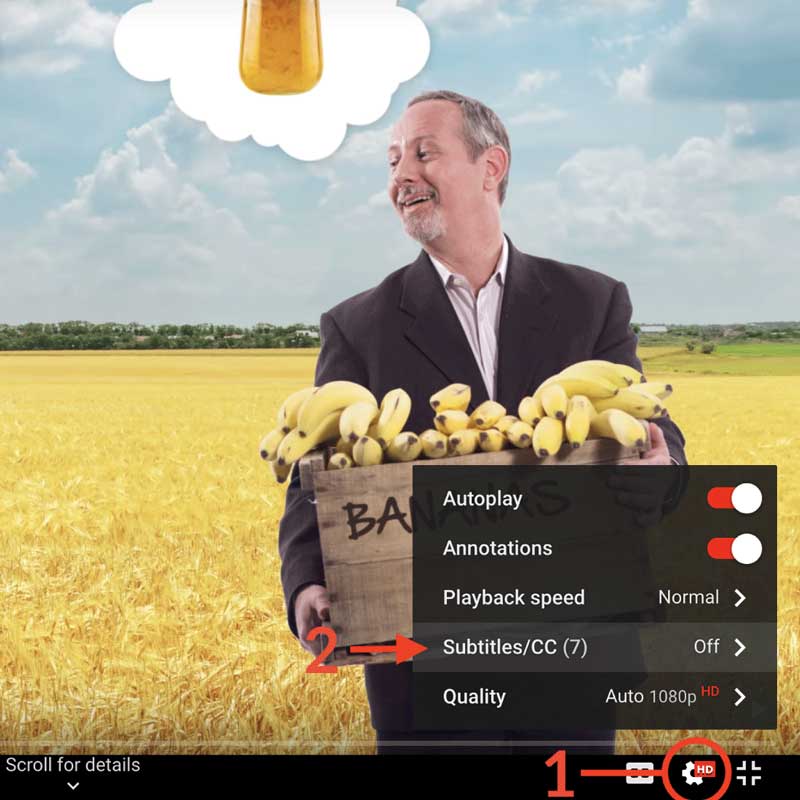
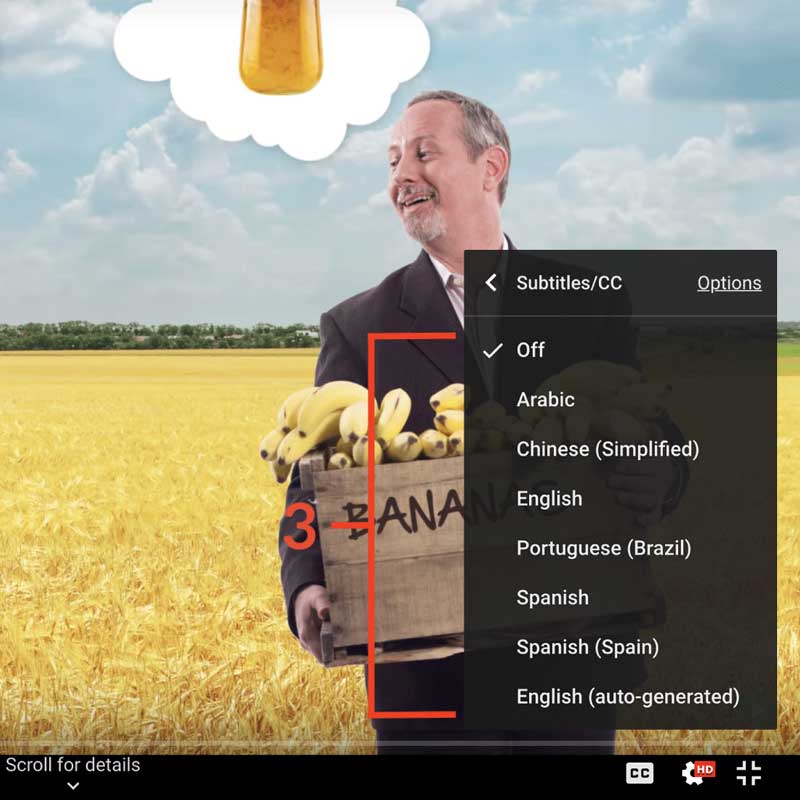
How to turn on captions and select a language:
- Click the settings icon (⚙) at the bottom of the video screen.
- Click Subtitles/CC.
- Select a language.
Contribute Translations!
Join the team and help us provide world-class economics education to everyone, everywhere for free! You can also reach out to us at [email protected] for more info.
Submit subtitles
Accessibility
We aim to make our content accessible to users around the world with varying needs and circumstances.
Currently we provide:
- A website built to the W3C Web Accessibility standards
- Subtitles and transcripts for our most popular content
- Video files for download
Are we missing something? Please let us know at [email protected]
Creative Commons

This work is licensed under a Creative Commons Attribution-NoDerivatives 4.0 International License.
The third party material as seen in this video is subject to third party copyright and is used here pursuant
to the fair use doctrine as stipulated in Section 107 of the Copyright Act. We grant no rights and make no
warranties with regard to the third party material depicted in the video and your use of this video may
require additional clearances and licenses. We advise consulting with clearance counsel before relying
on the fair use doctrine.