The Rise of Digital People: Mustafa Suleyman and Ian Bremmer on the Future of AI
Course Outline
The Rise of Digital People: Mustafa Suleyman and Ian Bremmer on the Future of AI
What does AI mean for the future of work and society? In this conversation, Mustafa Suleyman and Ian Bremmer discuss how artificial intelligence is reshaping our world and populating it with myriad “digital people.”
Mustafa Suleyman, co-founder of DeepMind and Inflection AI, joins political scientist Ian Bremmer to discuss the extraordinary pace of AI development, its economic and social implications, and how humanity should adapt. Looking beyond the (maybe obsolete) Turing Test to the creation of emotionally intelligent AI assistants, this video explores the promises and perils of our AI-driven future.
Teacher Resources
Transcript
Ian: In the past year, artificial intelligence has captured our imagination like never before, transforming how we work, perceive the world, and even who we are as people. This technological renaissance has few names as prominent as Mustafa Suleyman, a pioneer in AI for over a decade, co-founder of DeepMind, and a key figure in using AI to make the world better. Today, we’re discussing AI’s exciting potential and its future concerns with Mustafa. Thank you for joining us. Mustafa, you’ve been in AI for nearly 20 years. What’s made it so omnipresent now?
Mustafa: For much of that time, I was among fringe AI researchers considered a bit crazy. When I started DeepMind in 2010, AI was speculative, far from mainstream. In recent years, it’s grown in the public’s imagination, starting with breakthroughs like AlphaGo, our AI designed to play the complex board game Go on a 19x19 grid—far more intricate than chess’s 8x8 grid. Go has 10^170 possible configurations, more than atoms in the universe, requiring new learning methods beyond traditional rule-based approaches.
Ian: It’s a lot more complicated than chess, absolutely.
Mustafa: Exactly. Traditional methods failed due to Go’s vast complexity. We developed deep learning, initially for games, then image recognition, audio transcription, and recently, text generation. This ability to create unique text, images, or speech at human-level performance has driven AI’s recent surge. AIs like ChatGPT or my company Inflection’s Pi, a conversational AI, feel like talking to a human, nearly passing the Turing test proposed by Alan Turing in the 1950s.
Ian: So, we can now converse with AI bots indistinguishable from humans in short interactions. That’s a fair point, right?
Mustafa: Yes, it’s surreal. While still distinguishable with close attention, AIs like Pi show empathy and emotional intelligence, making conversations feel human. However, they’re not truly intelligent—they predict responses based on data and patterns, not thinking. This challenges our understanding of intelligence, as passing the Turing test suggests we need a new measure, like an Artificial Capable Intelligence (ACI), evaluating what AI can do—write emails, negotiate contracts, or even turn a profit like a mini-entrepreneur.
Ian: For young people curious about AI, how should they engage constructively for their future?
Mustafa: AIs have vast knowledge from the open internet—Wikipedia, blogs, books—so start by talking to one like Pi. Test its limits on a topic you know, explore its strengths and weaknesses, and prompt it creatively, like mimicking Obama or Shakespeare. You can even program open-source models to embody personas, like a Formula One expert or a cactus specialist, creating game characters or co-writing stories. The possibilities are limitless.
Ian: You’re optimistic about AI’s potential, but it can be programmed for harm, like spreading disinformation or deepfakes. How do we limit these dangers?
Mustafa: Major AI providers, like Inflection, commit to ethical principles, preventing misinformation or impersonation of public figures. As models become open-source, this gets harder, requiring careful moderation to ensure stable outcomes and avoid chaotic transitions, given the potential for anyone to run powerful AIs independently in the future.
Ian: AI isn’t yet replacing lawyers, teachers, or nurses, but it’s close. What’s next in the near term that will blow our minds?
Mustafa: In two to three years, we’ll be surrounded by “digital people”—AIs generating real-time, personalized text, images, and video, far beyond static web pages. Unlike electricity or the internet, AI’s dynamic, interactive nature tailors content to each user, creating a new paradigm where avatars act like humans, performing tasks like booking or emailing, fundamentally changing how we interact with technology.
Ian: What do you mean by “digital people,” and how will they impact society, the economy, and government?
Mustafa: Digital people are AIs that speak, see, and act like humans—buying, planning, or emailing. At Inflection, we design Pi to be empathetic, patient, and non-judgmental, encouraging real-world connections. This shift could lead people to prefer AI interactions, raising ethical design challenges. Every sector—economy, society, government—must adapt to these significant digital relationships, akin to smartphones becoming indispensable in a decade.
Ian: How do we guard against AI’s rapid changes overwhelming society’s ability to adapt?
Mustafa: Society is progressing—corporations are more responsible than in the 1950s, and at Inflection, we’re a public benefit corporation prioritizing ethical impacts. Still, rapid AI adoption requires careful management to avoid excesses, like over-engagement, ensuring AI enhances human lives without exploiting vulnerabilities.
Ian: In five years, as AI takes over jobs, how should young people prepare for this transformative future?
Mustafa: AI is accessible without technical skills—you can prompt models with natural language, bringing diverse perspectives. This is a creative moment, like the invention of electricity, where anyone can innovate. Multidisciplinary skills combining creativity, problem-solving, and technical knowledge will be key, as AIs struggle with integrating diverse skill sets.
Ian: Which jobs should young people avoid, and why?
Mustafa: Jobs like call center operators or routine sales roles are at risk, as AIs already handle these efficiently. Focus on multidisciplinary education blending creative and technical skills to stay versatile and competitive in an AI-driven world.
Ian: Looking 50–70 years ahead, how will AI shape young people’s futures? Could they live indefinitely, and what does that mean for society?
Mustafa: AI will amplify human creativity, reducing suffering through medical breakthroughs, potentially extending lifespans to 200–300 years by 2050. This could free people from work via universal basic income, allowing time for hobbies, family, and community. AI turbocharges choices seen in the pandemic, like remote work, letting people live more freely and re-engineer societal norms like gender bias or nationalism for a more equitable world.
Mustafa: The pandemic showed we can rethink societal structures quickly, revealing benefits in flexibility. AI will further challenge assumptions, enabling decentralized energy or new social models, transforming how we live and interact.
Narrator: If you’re intrigued by AI’s possibilities, check out our other videos in this series. Thank you for watching.
Subtitles
- English
- Spanish
- Chinese
Thanks to our awesome community of subtitle contributors, individual videos in this course might have additional languages. More info below on how to see which languages are available (and how to contribute more!).
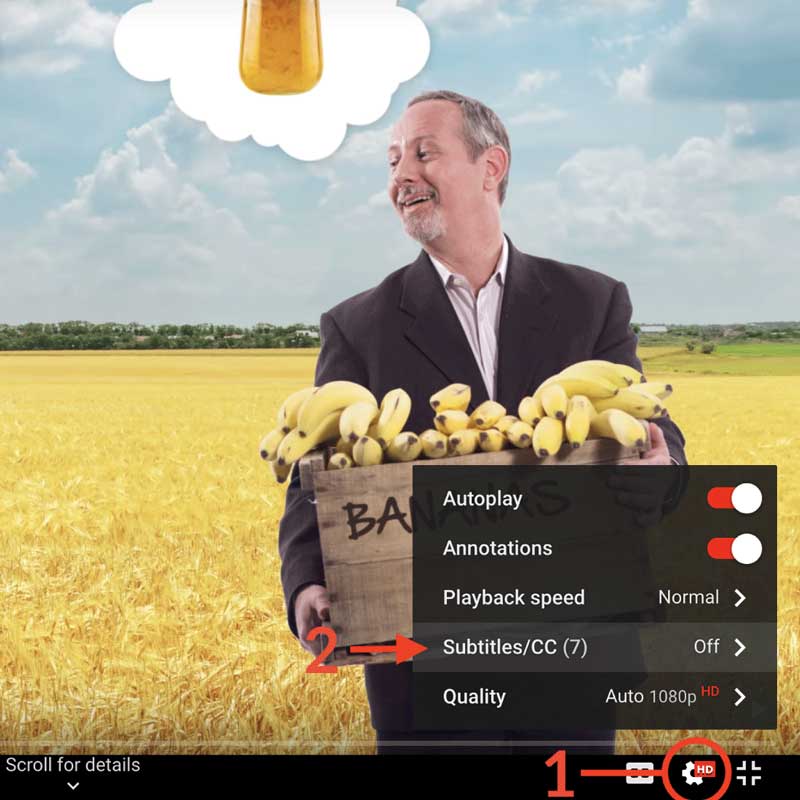
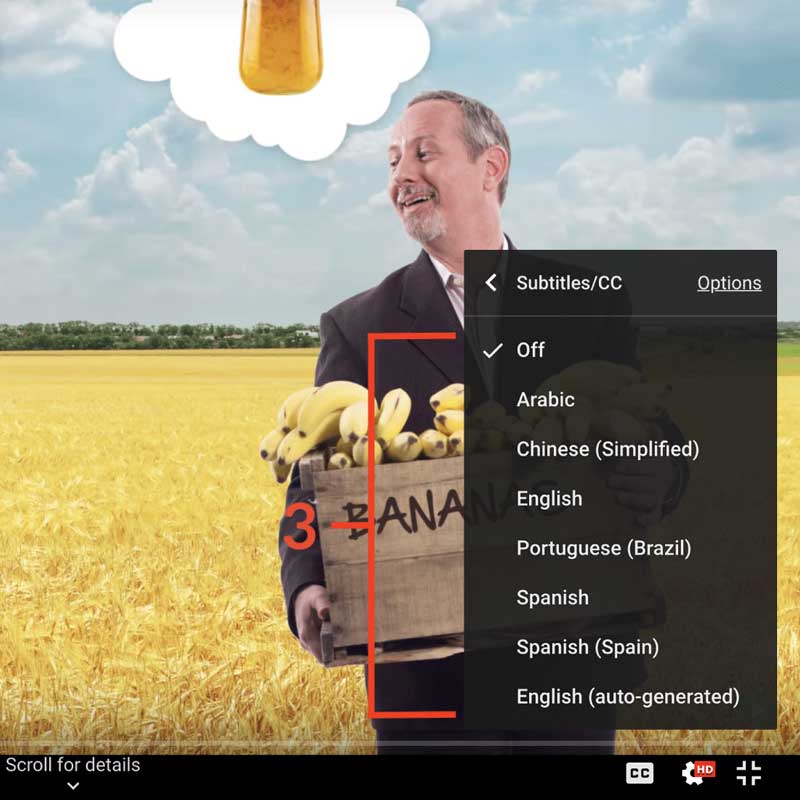
How to turn on captions and select a language:
- Click the settings icon (⚙) at the bottom of the video screen.
- Click Subtitles/CC.
- Select a language.
Contribute Translations!
Join the team and help us provide world-class economics education to everyone, everywhere for free! You can also reach out to us at [email protected] for more info.
Submit subtitles
Accessibility
We aim to make our content accessible to users around the world with varying needs and circumstances.
Currently we provide:
- A website built to the W3C Web Accessibility standards
- Subtitles and transcripts for our most popular content
- Video files for download
Are we missing something? Please let us know at [email protected]
Creative Commons

This work is licensed under a Creative Commons Attribution-NoDerivatives 4.0 International License.
The third party material as seen in this video is subject to third party copyright and is used here pursuant
to the fair use doctrine as stipulated in Section 107 of the Copyright Act. We grant no rights and make no
warranties with regard to the third party material depicted in the video and your use of this video may
require additional clearances and licenses. We advise consulting with clearance counsel before relying
on the fair use doctrine.