What Are Negative Externalities?
Course Outline
What Are Negative Externalities?
In this video, we explain negative externalities with a real-world example: overuse of antibiotics leading to the evolution of “superbugs.” Antibiotic users benefit from the drugs, while society at large bears the added cost (and risk) of increased antibiotic resistance leading to hard-to-treat infections.
A few highlights from the video:
- The Definition of Negative Externalities. Externalities occur when a transaction between two parties also affects third parties (bystanders). A negative externality occurs when the transaction imposes costs on bystanders. Air and water pollution are classic examples of negative externalities.
- Graphing Negative Externalities. We can plot negative externalities on a supply and demand graph, using a new line for social costs (above the supply curve by the amount of the external cost). The social cost curve intersects the demand curve at the socially optimal quantity.
- The Impact of Negative Externalities. The market overproduces a good with a negative externality relative to the efficient equilibrium. Society is worse off due to the oversupply, resulting in deadweight loss. At the efficient equilibrium, where the social cost curve intersects the demand curve, social surplus—the sum of producer surplus, consumer surplus, and bystander surplus—is maximized.
Be sure to check out our other videos covering positive externalities, as well as public policy solutions to address externalities: Pigouvian taxes and subsidies, Coasean bargaining, tradable allowances, and command and control.
Related Resources
Related Videos

Teacher Resources
Related to this video


Related to this course
See all Teacher Resources related to this course
Transcript
Let's travel back to June 1924. President Coolidge's son, Calvin Jr., is outside the White House playing lawn tennis. While playing, he develops a blister on his right foot. A week later, Calvin Jr. is dead. A simple staph infection developed from a blister leading to sepsis. Even though Calvin Jr. was the president's son, there was no medicine to save him. Deaths from infection were common at the time. Even small wounds could become a life or death ordeal.
Just four years later, penicillin was discovered — a breakthrough that could have saved Calvin Jr.'s life. This first antibiotic revolutionized medicine. Once fatal, bacterial infections became easily curable. But today, that miracle is under threat from superbugs — bacteria resistant to antibiotics.
How did superbugs happen? And what does this have to do with economics?
In the market for antibiotics, we have buyers — represented by the demand curve — and sellers — represented by the supply curve. A trade happens when the buyer values the good more than the market price and the seller values the market price more than the good. The buyer and the seller transact, and both benefit.
All the buyers on this part of the demand curve value the antibiotics more than the price, and they buy them. All the sellers on this part of the supply curve can produce antibiotics for profit and sell them. When we say a market maximizes the gains from trade, we're referring to every trade being mutually beneficial. Consumer and producer surplus are maximized. This is why economists like markets.
But now we have a problem: those pesky superbugs. We have to introduce a new entity into our analysis: the bystanders. Bystanders are neither buying nor selling, but nonetheless, they're affected by the purchase and use of antibiotics.
The economic concept of externalities describes the effect of market trade on bystanders. When bystanders bear a cost, it's called a negative externality. When bystanders receive a benefit, that's called a positive externality. Either way, buyers and sellers do not typically consider externalities on other people, and that means the market equilibrium will maximize the sum of producer and consumer surplus but not bystander surplus. And that's not good.
The use of antibiotics has a negative externality problem. Why is that? No antibiotic is 100% effective. The antibiotic kills some bacteria, but some stronger bacteria survive, flourish, and reproduce, eventually rendering the antibiotic ineffective. We then develop a new antibiotic, and the story repeats. Play this evolutionary process out, and you end up with superbugs that are resistant to many of our antibiotics.
The fundamental problem is that antibiotic users reap all the benefits of antibiotic use without bearing all of the costs. Each use of an antibiotic creates a small increase in bacterial resistance. We all suffer the consequences of the resulting less effective antibiotics every time that someone uses them.
Now, let's deploy supply and demand to better visualize this externality problem. Here's our standard diagram with the quantity of antibiotics on the horizontal axis. On the vertical axis, we're showing both prices and costs so that we can illustrate both the price charged for antibiotics and the costs to bystanders.
As usual, the equilibrium is found where demand intersects supply. Now, the key point is that the supply curve is based on what we'll call the "private cost" — the cost of producing the antibiotic paid by the supplier. But we know there's another cost. Every time an antibiotic is produced and consumed, there's a cost of increased bacterial resistance. We'll call that the "external cost."
Negative externality is just another way of saying there's an external cost on bystanders. Suppliers do not typically consider the external costs of their production to bystanders, so bystander costs are not reflected in the price. We can add the external cost to the private supply curve to make a new curve: the social cost curve. The social cost is the cost to everyone, including bystanders. The vertical distance here is the external cost — the cost to bystanders.
Now, let's evaluate both quantities. The market equilibrium shows the quantity the market produces — the quantity that maximizes producer and consumer surplus. But we want to maximize social surplus, which is the total net value created, namely the sum of consumer surplus, producer surplus, and bystander surplus. Since we have large external costs, we don't want to produce at the market equilibrium. We want to produce here, where the social cost curve intersects the demand curve — that's where social surplus is maximized.
You can see that the market equilibrium quantity is higher than the socially efficient quantity. This difference represents the overuse of antibiotics.
We can show this in another way. Let's look at the value of the last unit the market produces. What's the value of that last unit? The private value is given by the height of the demand curve — that's what consumers are willing to pay. What's the cost of that last unit? The private cost is given by the private supply curve, but the social cost is given by the higher social cost curve.
We don't want to produce this last unit because the social cost is greater than the value. If we don't want to produce that last unit, then we don't want to produce any of the units where the social cost is going to be greater than the value. In other words, this area is a deadweight loss. The social cost of these units is greater than their value. Producing these units means society is worse off as a result. And this represents the loss to society from the overuse of antibiotics.
So what conclusions can we draw? If every deployment of an antibiotic had a high-value use — say, if it saved a life — then the rise of superbugs would be unfortunate, but not necessarily something we could or should do something about. But in fact, antibiotics are often deployed in low-value uses. For instance, sometimes people take antibiotics when they don't even need them. The market price does not include the external costs, namely the costs of bacterial resistance on bystanders. It's incentivizing consumption where the social cost exceeds the value. The market price of antibiotics is too low. We would like to discourage these low-value uses with a higher price.
Many people assume with a negative externality that the optimal quantity is zero, but that's almost never the case. We still want the people who highly value the good to buy it — in this example, for instance, someone with a dangerous infection. We just don't want to produce and sell goods whose value is less than the social cost.
Remember that a free market maximizes consumer surplus plus producer surplus, but it does not take into account the costs or benefits to bystanders. Ultimately, what we care about is the total social surplus — costs and benefits to consumers, producers, and also to bystanders. When external costs are large, the market will not maximize social surplus.
Externalities, whether negative or positive, are useful tools for analyzing markets and leading us toward a variety of solutions to account for them. We'll discuss those in other videos.
If you're a teacher, you should check out our Externalities and Public Goods Unit Plan that incorporates this video. If you're a learner, make sure this video sticks by answering a few quick practice questions. Or, if you're ready for more microeconomics, click for the next video.
Subtitles
- English
- Spanish
- Chinese
- Hindi
- French
- Arabic
Thanks to our awesome community of subtitle contributors, individual videos in this course might have additional languages. More info below on how to see which languages are available (and how to contribute more!).
How to turn on captions and select a language:
- Click the settings icon (⚙) at the bottom of the video screen.
- Click Subtitles/CC.
- Select a language.
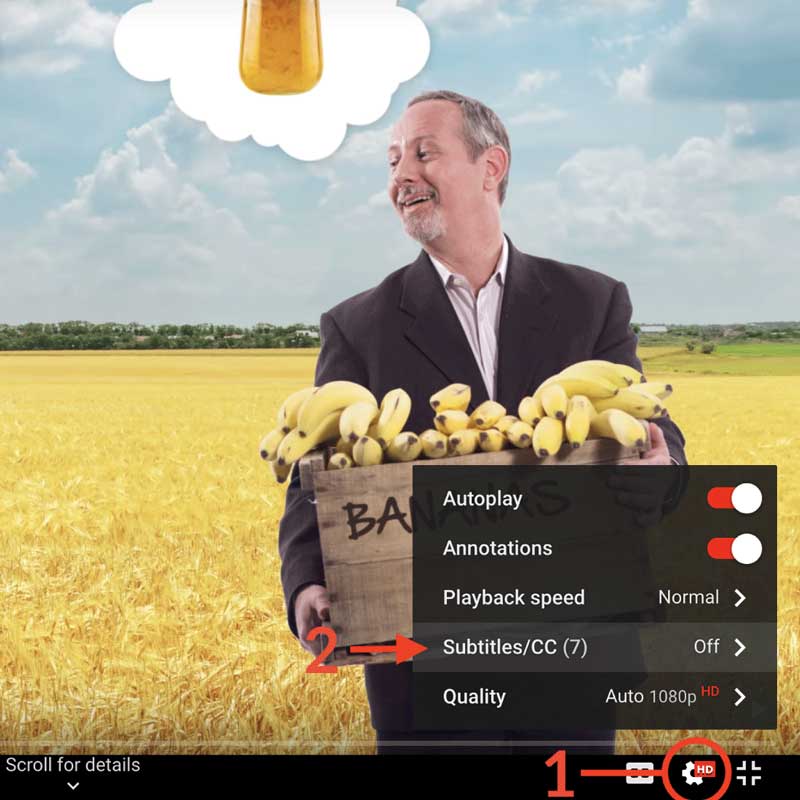
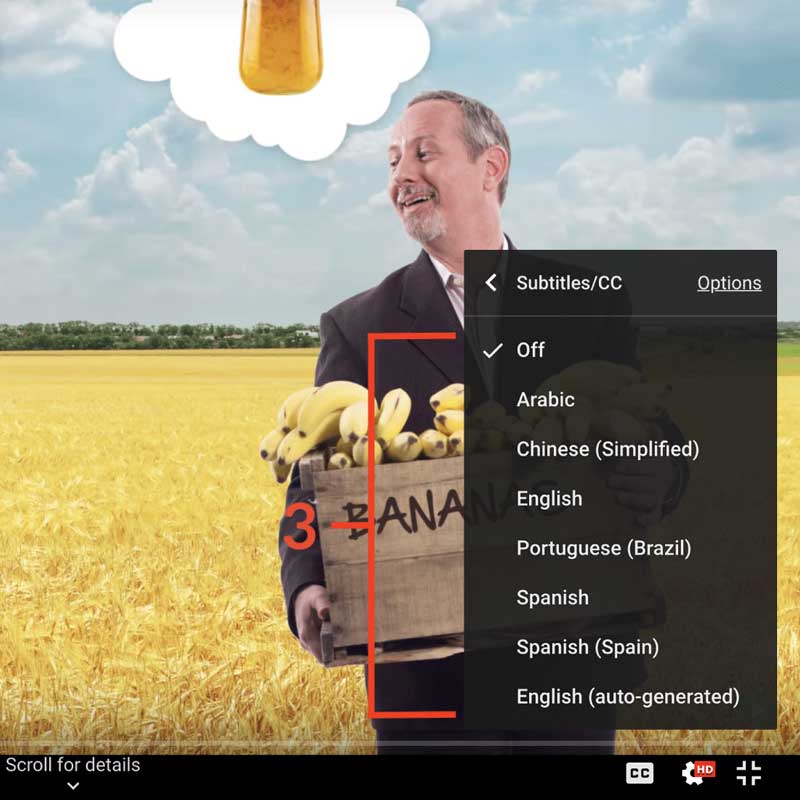
Contribute Translations!
Join the team and help us provide world-class economics education to everyone, everywhere for free! You can also reach out to us at [email protected] for more info.
Submit subtitles
Accessibility
We aim to make our content accessible to users around the world with varying needs and circumstances.
Currently we provide:
- A website built to the W3C Web Accessibility standards
- Subtitles and transcripts for our most popular content
- Video files for download
Are we missing something? Please let us know at [email protected]
Creative Commons

This work is licensed under a Creative Commons Attribution-NoDerivatives 4.0 International License.
The third party material as seen in this video is subject to third party copyright and is used here pursuant
to the fair use doctrine as stipulated in Section 107 of the Copyright Act. We grant no rights and make no
warranties with regard to the third party material depicted in the video and your use of this video may
require additional clearances and licenses. We advise consulting with clearance counsel before relying
on the fair use doctrine.