What Are Positive Externalities?
Course Outline
What Are Positive Externalities?
In this video, we explain positive externalities with a real-world example: influenza vaccines that help prevent the spread of the disease. Patients who get the shots bear all of the costs (monetary and otherwise), but society at large benefits from reduced transmission, preventing some people from getting the flu even if they weren’t vaccinated.
A few highlights from the video:
- The Definition of Positive Externalities. Externalities occur when a decision or a transaction between two parties also affects third parties (bystanders). A positive externality occurs when the transaction provides benefits to bystanders. Tidying up your yard is a classic example–the whole neighborhood enjoys the benefits of your property looking nicer.
- Graphing Positive Externalities. We can plot positive externalities on a supply and demand graph, using a new line for social value (above the demand curve by the amount of the external benefit). The social value curve intersects the supply curve at the socially optimal quantity.
- The Impact of Positive Externalities. The market underproduces a good with a positive externality relative to the efficient equilibrium. Society is worse off due to the undersupply, resulting in deadweight loss. At the efficient equilibrium, where the social benefit curve intersects the supply curve, social surplus—the sum of producer surplus, consumer surplus, and bystander surplus—is maximized.
Be sure to check out our other videos covering negative externalities, as well as public policy solutions to address externalities: Pigouvian taxes and subsidies, Coasean bargaining, tradable allowances, and command and control.
Teacher Resources
Related to this video


Related to this course
See all Teacher Resources related to this course
Transcript
In an earlier video, we covered negative externalities. So now, let's turn to positive externalities.
Our earlier example of a negative externality was how the overuse of antibiotics can lead to antibiotic-resistant superbugs. Bystanders bear an unwanted cost, a negative externality, from others' decisions to use more antibiotics.
What's a positive externality? A positive externality is when a bystander receives a benefit, rather than a cost, from a decision or a market transaction. A simple example is if I make my lawn look nicer -- that's better for my neighbors too.
But let's consider an example with greater social import. Let's consider medicine. Can you guess which type of medicine creates a significant positive externality? Actually, it's the simple flu shot.
When you get a flu shot, not only are you less likely to get the flu, but those around you are less likely to get the flu as well, whether or not they've had the shot. That's because the flu is highly contagious, and your flu shot limits the spread of the virus.
Sounds great, right? But still, there's a problem.
Let's step back for a moment and just consider some analysis. The term "social surplus" refers to the total net value created, namely the sum of consumer surplus, producer surplus, and bystander surplus.
Similar to what we saw with negative externalities, a market with positive externalities is not maximizing social surplus. Why not?
The buyer of the flu shot bears all of the costs of the shot. They have to schedule an appointment, take time off work, actually get the needle in their arm, pay any fees, and so on. They bear all of the costs, but they receive only some of the benefits. The social value of the flu shot is larger than the private value, and so we get an undersupply of flu shots.
Here's a supply and demand graph with the quantity of flu shots on the horizontal axis. On the vertical axis, we're showing both prices and costs so that we can illustrate both the price paid for a flu shot and the social value to bystanders.
Here's the market equilibrium. The demand curve represents how individuals value a flu shot. When they decide to get a flu shot, individuals compare their personal benefits to their costs. Many people do not sufficiently consider the external benefits of a flu shot to all relevant bystanders. That is, not all of us are total altruists.
When we add the external benefits to the private benefits, we get the social value curve here. This curve represents the value to consumers and to the bystanders of the flu shot. The vertical difference in height between the demand curve and the social benefit curve -- that's the external benefit, or positive externality.
Social surplus is maximized where the social value curve intersects the supply curve. The socially efficient quantity is greater than the equilibrium quantity. That is the sense in which the market undersupplies goods with positive externalities.
Let's take a closer look at the marginal value and cost of the last flu shot the market produces. The private value is given by the height of the demand curve, and is equal to the private cost, given by the height of the supply curve. But the social value is given by the height of the social value curve, which, at this point, is higher than the cost.
In fact, notice that the social value exceeds the cost for all quantities between the equilibrium quantity and the efficient quantity. From the perspective of society, these are units we want to be consumed, as their social value exceeds their cost. But the market is not supplying them. We're not maximizing social surplus.
We again see a deadweight loss, and by that term "deadweight loss," we mean potential gains from trade that are not realized.
So what can we do about deadweight loss from a positive externality? I'll give you a hint. Flu shots are now increasingly available at discounted prices, or sometimes even for free. Why is that? We'll explore that topic in our next video.
If you're a teacher, you should check out our Externalities and Public Goods unit plan that incorporates this video. If you're a learner, make sure this video sticks by answering a few quick practice questions. Or, if you're ready for more microeconomics, click for the next video.
Subtitles
- English
- Spanish
- Chinese
- Hindi
- French
- Arabic
Thanks to our awesome community of subtitle contributors, individual videos in this course might have additional languages. More info below on how to see which languages are available (and how to contribute more!).
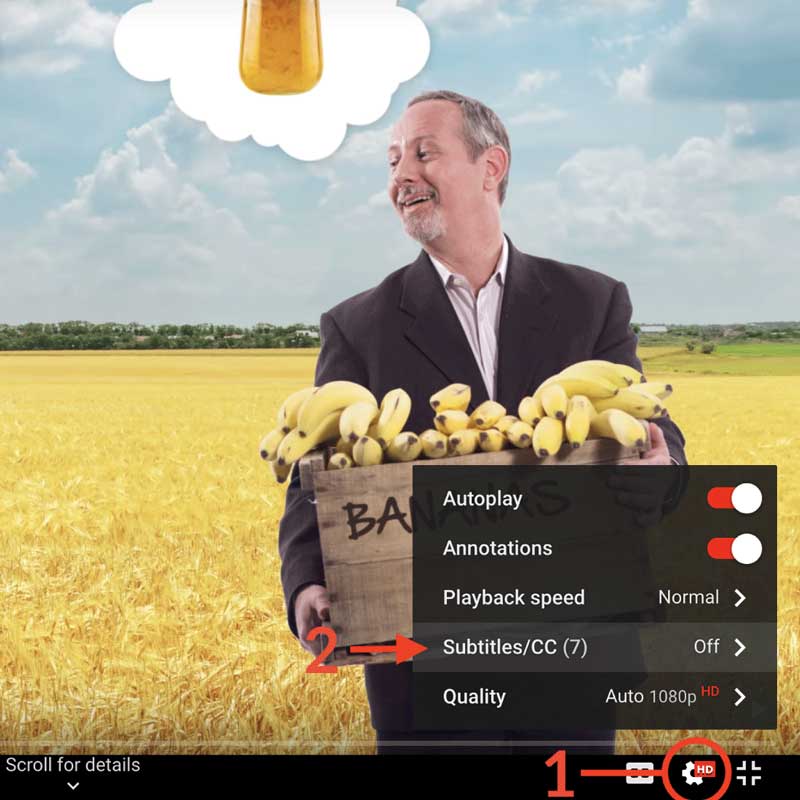
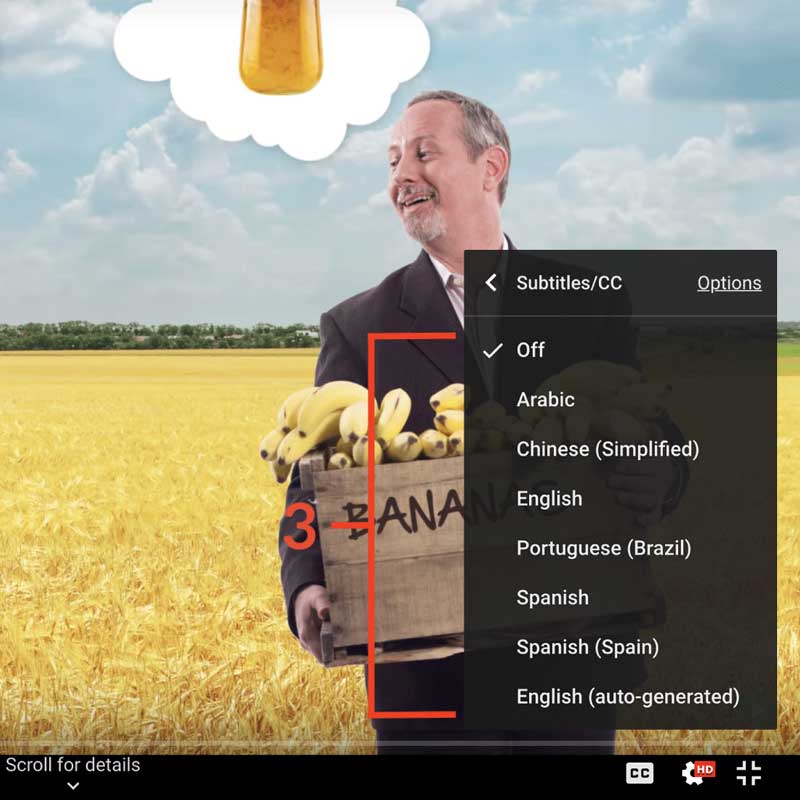
How to turn on captions and select a language:
- Click the settings icon (⚙) at the bottom of the video screen.
- Click Subtitles/CC.
- Select a language.
Contribute Translations!
Join the team and help us provide world-class economics education to everyone, everywhere for free! You can also reach out to us at [email protected] for more info.
Submit subtitles
Accessibility
We aim to make our content accessible to users around the world with varying needs and circumstances.
Currently we provide:
- A website built to the W3C Web Accessibility standards
- Subtitles and transcripts for our most popular content
- Video files for download
Are we missing something? Please let us know at [email protected]
Creative Commons

This work is licensed under a Creative Commons Attribution-NoDerivatives 4.0 International License.
The third party material as seen in this video is subject to third party copyright and is used here pursuant
to the fair use doctrine as stipulated in Section 107 of the Copyright Act. We grant no rights and make no
warranties with regard to the third party material depicted in the video and your use of this video may
require additional clearances and licenses. We advise consulting with clearance counsel before relying
on the fair use doctrine.