What Shifts the Supply Curve?
Course Outline
What Shifts the Supply Curve?
What shifts the supply curve? Anything that changes a supplier's costs. Learn how input costs, technology, taxes, trade, and even expectations shift supply in economics.
You’ll learn:
- Why higher costs shift supply up and to the left
- Why lower costs shift supply down and to the right
- How improvements in technology increase supply
- How taxes, subsidies, and input prices affect producers
- How trade and market entry affect supply
- How opportunity costs and expectations influence supply
Using clear examples—from strawberries and blueberries to lumber, bagels, and orange juice—we show how economists think about supply shifts in the real world.
Teacher Resources
Related to this course
See all Teacher Resources related to this course
Transcript
In previous videos, we've covered the basics of the supply curve. In this video, we're going to look at what shifts a supply curve.
The answer is a change in costs.
An increase in costs decreases supply, which means that the supply curve shifts up and to the left.
Why? Well, remember our two ways of reading a supply curve.
Read horizontally, the shift to the left says that now that costs are higher, suppliers are willing and able to sell a smaller quantity at the same price.
Read vertically, an increase in costs means that for any given quantity, suppliers must be paid more to supply that quantity. So the supply curve shifts up.
Either way of thinking about the supply shift is correct. Higher costs mean up and to the left.
A decrease in costs increases supply, meaning that the supply curve shifts down and to the right.
Now that costs are lower, at any given price, suppliers are willing to sell more. Or, equivalently, now that costs are lower, for any given quantity, suppliers are willing to sell that quantity at a lower price.
Lots of factors can increase or decrease costs. In this video, we'll go through several examples.
Let's start with technological innovations.
Suppose you're a strawberry farmer, and a new fantastic automated strawberry picker has been invented. How does that affect the supply of strawberries?
Well, this technological innovation reduces costs and therefore increases supply. That means that strawberry producers are willing to supply a greater quantity of strawberries at any given price. Or, equivalently, they're willing to sell a given quantity of strawberries at a lower price. The supply curve shifts down and to the right.
Next, let's look at input prices.
Imagine you make wood furniture, but massive forest fires destroy tree farms, so the price of wood increases. Now what will happen to the supply of wood furniture?
The costs of producing wood furniture have increased. That means the supply decreases, and the supply curve moves to the left and up.
At any price, producers are willing to sell a lower quantity of furniture. Or, equivalently, they're willing to sell a given quantity only at a higher price now that their costs have gone up.
Next, let's look at taxes and subsidies, starting with taxes.
Imagine there's a 50-cent tax on bagels in New York. A tax is equivalent to an increase in costs, and therefore a tax will decrease supply.
Suppose that before the tax, New York bagel producers were willing to sell one million bagels at a price of $4 per bagel. Now we add the 50-cent tax.
This shifts the supply curve up by exactly 50 cents. So to continue selling 1 million bagels, suppliers would need to be paid $4.50 per bagel.
By the way, notice that we haven't yet said what the effect of a 50-cent tax would be on the market price. We'll cover that in a future video.
Now what about a subsidy?
A subsidy is just the opposite of a tax. A subsidy is equivalent to a decrease in the firm's costs, and therefore it increases supply.
Next, let's look at the entry or exit of producers.
What happens to the supply of lumber in the United States if there's a free trade deal which lets Canadian producers sell their lumber in the U.S.?
Entry implies more sellers in the market, which increases supply.
Here's the U.S. supply curve with just American producers of lumber. When Canadian producers enter the market, there are more suppliers of lumber, and therefore there's a greater quantity supplied at every price.
Or, equivalently, some of the Canadian suppliers will have lower costs than their American counterparts. The supply curve shifts down.
So opening the lumber market to trade will increase supply, meaning that the supply curve shifts down and to the right.
And of course, if instead of opening the lumber market to trade, we close the market with tariffs or quotas or laws that say American homes must be built with American lumber, well, that will decrease supply.
Another factor that changes costs is changes in opportunity costs.
This one is a bit tricky because we usually think about costs in terms of dollar costs. However, the fundamental concept of cost is opportunity cost.
Inputs that are used in production have opportunity costs. They can be used to produce many different things.
For example, what will happen to the supply of strawberries when the price of blueberries increases?
Here's a hint: farmers can use their land to grow strawberries or to grow blueberries. Farmers have a choice about how to use their land.
Here's our initial supply curve for strawberries with a low price of blueberries. Farmers find it most profitable to use their land to grow strawberries.
When the price of blueberries increases, the opportunity cost of growing strawberries increases. So farmers will take some of their land out of strawberry production and move it into blueberries.
Farmers are now willing to supply fewer strawberries because they're growing more blueberries. So the supply curve shifts to the left.
An increase in the price of blueberries increases the opportunity cost of growing strawberries, which reduces the supply of strawberries and shifts the supply curve up.
Our final example of a factor which can change costs is a change in expectations.
Suppose that people expect that next year's orange crop will be especially bad. That means that orange juice prices next year will probably be high because oranges will be scarce.
To take advantage of next year's price, farmers may freeze some of their orange juice to sell it next year instead of selling it all today.
So if farmers expect higher prices next year, they will reduce supply today, in other words, shifting today's supply curve up and to the left.
By the way, you can also think about this as a change in opportunity costs.
If the price of next year's orange juice goes up, that's an increase in the cost of selling orange juice today. Just like in our previous example, an increase in the price of blueberries increases the cost of growing strawberries.
Okay, that's our list of examples of factors that can change costs.
The important thing is not to memorize this list. Instead, remember that a decrease in costs shifts the supply curve down and to the right, and an increase in costs shifts the supply curve up and to the left.
Once you know that, you know how to shift the supply curve.
If you're a teacher, you should check out our supply and demand unit plan that incorporates this video. If you're a learner, make sure this video sticks by answering a few quick practice questions. Or, if you're ready for more microeconomics, click for the next video.
Subtitles
- English
- Spanish
- Chinese
- Hindi
- French
- Arabic
Thanks to our awesome community of subtitle contributors, individual videos in this course might have additional languages. More info below on how to see which languages are available (and how to contribute more!).
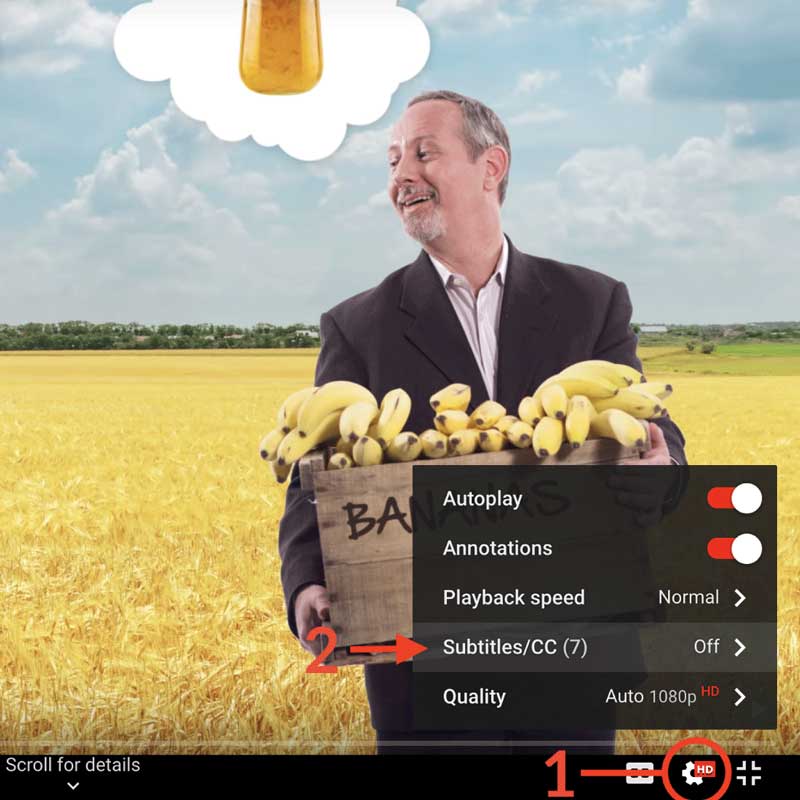
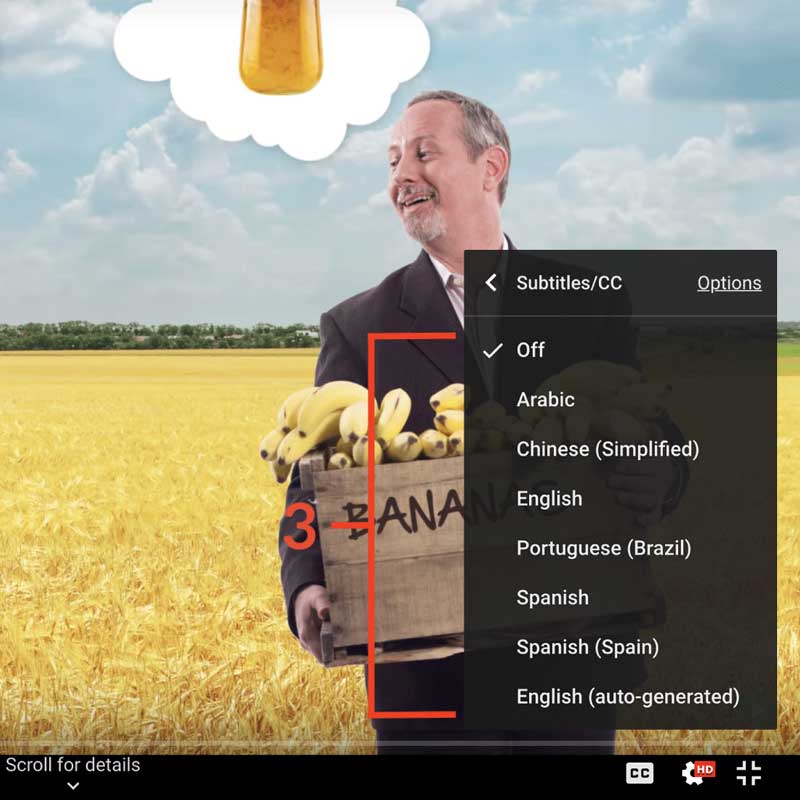
How to turn on captions and select a language:
- Click the settings icon (⚙) at the bottom of the video screen.
- Click Subtitles/CC.
- Select a language.
Contribute Translations!
Join the team and help us provide world-class economics education to everyone, everywhere for free! You can also reach out to us at [email protected] for more info.
Submit subtitles
Accessibility
We aim to make our content accessible to users around the world with varying needs and circumstances.
Currently we provide:
- A website built to the W3C Web Accessibility standards
- Subtitles and transcripts for our most popular content
- Video files for download
Are we missing something? Please let us know at [email protected]
Creative Commons

This work is licensed under a Creative Commons Attribution-NoDerivatives 4.0 International License.
The third party material as seen in this video is subject to third party copyright and is used here pursuant
to the fair use doctrine as stipulated in Section 107 of the Copyright Act. We grant no rights and make no
warranties with regard to the third party material depicted in the video and your use of this video may
require additional clearances and licenses. We advise consulting with clearance counsel before relying
on the fair use doctrine.