Graphing a Demand Curve from a Demand Schedule, and How to Read a Demand Graph
Course Outline
Graphing a Demand Curve from a Demand Schedule, and How to Read a Demand Graph
The demand curve is the line in a supply and demand graph that shows consumer behavior: at a given market price, how many units will consumers purchase? (Or, reading the chart in the opposite direction, how much is the marginal buyer willing to pay for the nth unit?)
Key topics in the video include:
- Definition of the demand curve
- Graphing a demand curve, starting from data in a demand schedule
- Why the demand curve slopes downward
- Two ways to read a demand curve: horizontal and vertical (and how each helps us understand consumer preferences and behavior in the market)
Teacher Resources
Related to this course
See all Teacher Resources related to this course
Transcript
In this video, we're going to dive deeper into the demand curve by building one together and then learning two different ways to read a demand curve.
So let's start with the definition of a demand curve. A demand curve is a function that shows the quantity demanded at different market prices. That's a bit mysterious, so let's take an example of the market for oil and then build a demand curve together.
Here's a hypothetical table of data that shows the amount of oil bought at different market prices. Suppose that at a price of $55 per barrel, the quantity of oil demanded would be 5 million barrels a day. At a lower price, say $20 per barrel, the quantity of oil demanded is going to be higher, say 25 million barrels a day. And at an even lower price—$5 per barrel—the quantity of oil demanded would be 50 million barrels a day.
Let's convert these into a graph with the price of oil on the vertical axis and the quantity of oil demanded on the horizontal axis. We can now graph our three points and connect them with a line—that's the demand curve for oil. It shows us the quantity demanded at each price.
Immediately, we see a key feature of the demand curve, which is that it slopes downward. At a lower price, the quantity demanded is greater—that makes intuitive sense. If the price is lower, you'll buy more.
Now let's discuss the two ways to read a demand curve. We'll start with the horizontal method. We begin by reading the price, say $55 per barrel—then read horizontally over to the demand curve, and then down to find that at that price, buyers are willing and able to purchase 5 million barrels of oil per day. At a price of $20 per barrel, buyers are willing and able to purchase 25 million barrels of oil. At a price of $5 per barrel, buyers are willing and able to purchase 50 million barrels of oil.
The second way of reading the demand curve, the vertical method, begins at the bottom and works its way up. It tells us the value, or the maximum price, that buyers are willing to pay for a particular barrel of oil. We pick a quantity along the x-axis, say the 5 millionth barrel of oil, and then read up to find the value of that barrel of oil—or, in other words, the maximum amount that buyers are willing to pay for that barrel, which is $55.
How about the 25 millionth barrel of oil? We can read up from the horizontal axis and then over to see that the maximum buyers are willing to pay is $20 for that barrel of oil.
Both ways of reading the demand curve are useful for solving different kinds of problems. The horizontal reading tells us the quantity demanded at a given price. The vertical method tells us how much buyers value a particular barrel of oil.
The demand curve is a fundamental tool in economics, so please be sure to practice building it and reading it until you've mastered it.
If you're a teacher, you should check out our supply and demand unit plan that incorporates this video. If you're a learner, make sure this video sticks by answering a few quick practice questions. Or, if you're ready for more microeconomics, click for the next video.
Subtitles
- English
- Spanish
- Chinese
- Hindi
- French
- Arabic
Thanks to our awesome community of subtitle contributors, individual videos in this course might have additional languages. More info below on how to see which languages are available (and how to contribute more!).
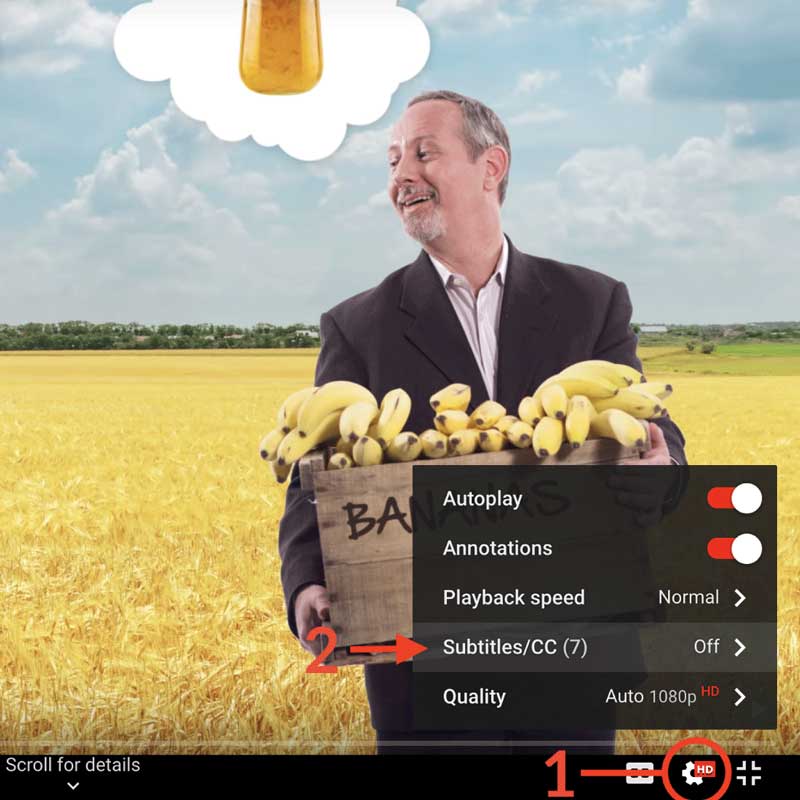
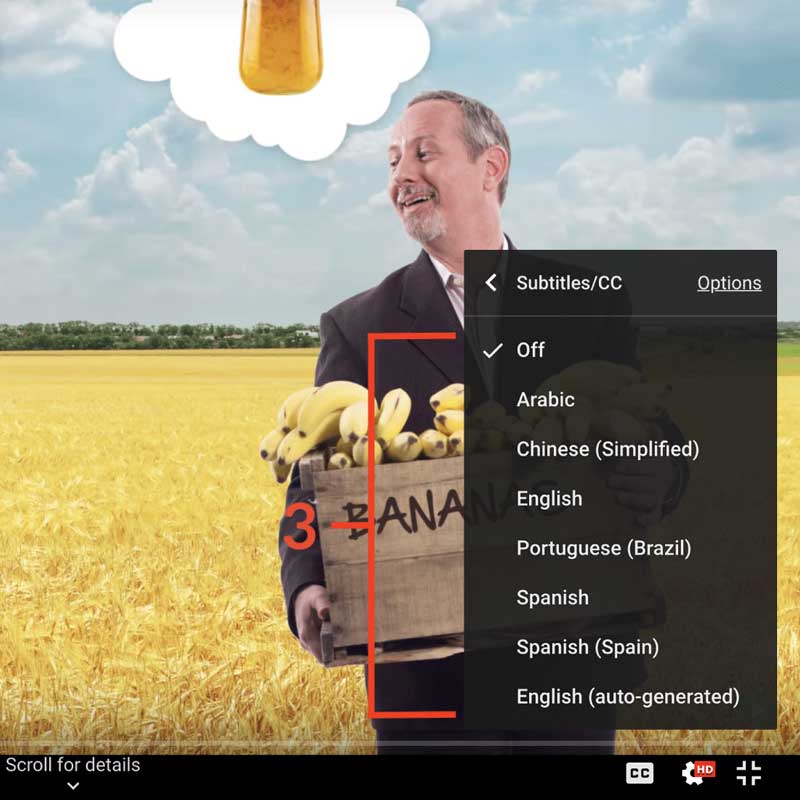
How to turn on captions and select a language:
- Click the settings icon (⚙) at the bottom of the video screen.
- Click Subtitles/CC.
- Select a language.
Contribute Translations!
Join the team and help us provide world-class economics education to everyone, everywhere for free! You can also reach out to us at [email protected] for more info.
Submit subtitles
Accessibility
We aim to make our content accessible to users around the world with varying needs and circumstances.
Currently we provide:
- A website built to the W3C Web Accessibility standards
- Subtitles and transcripts for our most popular content
- Video files for download
Are we missing something? Please let us know at [email protected]
Creative Commons

This work is licensed under a Creative Commons Attribution-NoDerivatives 4.0 International License.
The third party material as seen in this video is subject to third party copyright and is used here pursuant
to the fair use doctrine as stipulated in Section 107 of the Copyright Act. We grant no rights and make no
warranties with regard to the third party material depicted in the video and your use of this video may
require additional clearances and licenses. We advise consulting with clearance counsel before relying
on the fair use doctrine.